

How Much Does Extending Your House Cost?
Imagine transforming your current home into the one you've always dreamt of. No need for the upheaval and stress of moving – a well-planned extension can breathe new life into your existing space, adding valuable square footage and creating a haven tailored to your needs. But how much does this cost? Unfortunately this is not a straightforward question to answer. Just like cars, where a Ford and a Ferrari serve the same purpose but have vastly different prices, extending can vary greatly in cost depending on several variables such as the type of extension or the materials used. However, you can get a rough estimate of the cost by considering the cost per square meter. This rate can serve as a general guideline for what you might expect to pay.
Call For Hassle Free Quote
East 0131 547 0135 | West 01698 535 330
Understanding the Factors the Cost
There's no one-size-fits-all answer when it comes to costs. Several variables significantly impact the final price tag. By understanding these factors, you can make informed decisions and ensure your dream extension aligns with your budget:
1. Size and Complexity
As expected, the size of your extension directly influences the cost. A modest, single-story one will be considerably more affordable than a sprawling, multi-story addition. Complexity also plays a role. Additions with intricate designs, unusual angles, or high ceilings will require more resources and expertise, leading to a higher price point. The key purpose of your build also significantly impacts the cost. A kitchen or bathroom will cost more when compared to a simpler space like a playroom or office.
2. Material & Finishes Selection
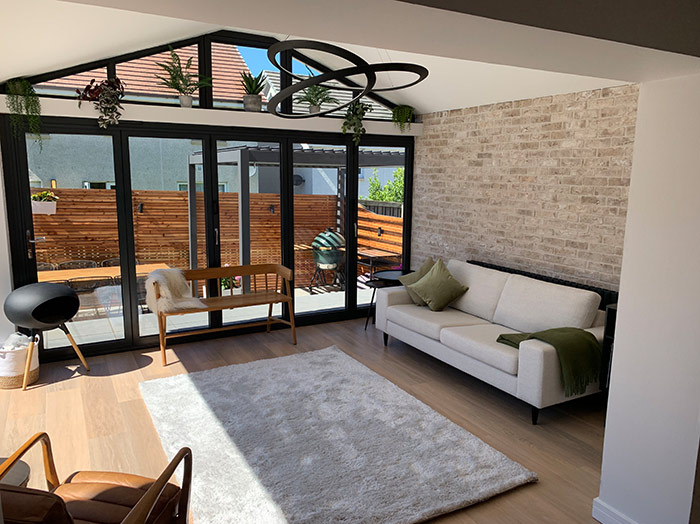
The materials and finishes you choose significantly impact the cost. Opting for high-end finishes like solid oak flooring, bi-fold doors or stone worktops will inflate the budget compared to standard materials like laminate or composite options. The key lies in finding the balance that aligns with your budget and desired look. Explore a range of options to create a space that reflects your taste without compromising your financial goals.
3. Type of Construction
The building blocks, quite literally, play a major role in determining the cost. Here's a breakdown of key factors:
Construction Method: A straightforward timber frame will be more budget-friendly compared to a complex steel frame addition. Timber frames are quicker to erect and require less specialist labour, translating to cost savings.
Exterior Materials: The choice of materials for your exterior significantly impacts the price tag. Timber cladding offers a classic and affordable option, while options like glass, metal, or stonework can add a unique touch but come at a higher cost.
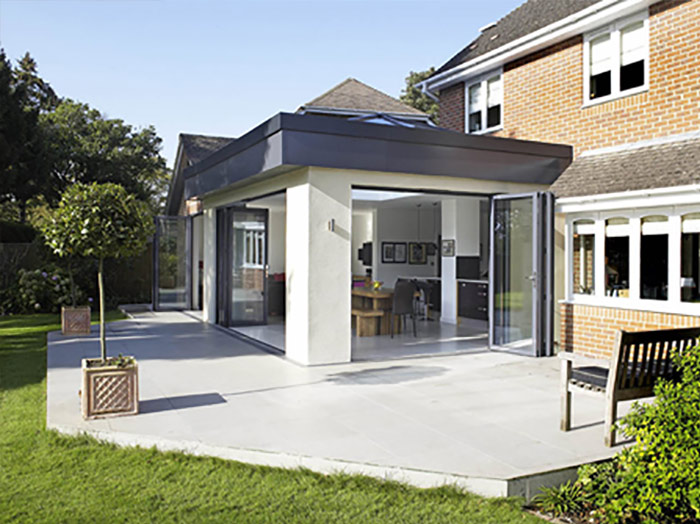
Windows & Doors: The functionality and aesthetics of your windows and doors directly impact the cost. Upgrading from standard, off-the-shelf options to features like triple glazing and sleek bifold doors will add to the overall price tag. Material selection also plays a role. uPVC windows and doors are typically the most cost-effective option, while options like aluminum or timber offer benefits like slimmer profiles and a more natural look but come at a higher cost. Carefully consider the features and materials that best suit your needs and budget. For example, if energy efficiency is a priority, triple glazing might be a worthwhile investment. However, if maximizing natural light is your goal, larger windows or strategically placed doors might be a better choice.
Adapting Your Existing Home: Any modifications needed to your existing structure, such as alterations to steelwork or walls, will incur additional expenses. Factor these potential costs into your overall budget.
By carefully considering these factors, you can choose construction methods and materials that align with your budget and desired aesthetic.
4. Building Expertise
The experience and qualifications of your chosen builder and architect play a role in the overall cost. Reputable professionals with proven track records might charge a premium, but their expertise can ensure a smooth, high-quality project, potentially saving you money on costly mistakes or delays down the line.
5. Groundworks & Foundations
Depending on your soil type and the extension's design, substantial groundwork or foundation work might be necessary. This can add to the overall project cost, but a qualified engineer can assess your specific situation and advise on the most cost-effective solutions.
Average Costs per Square Metre
When navigating costs, the concept of cost per square meter (£/m²) becomes your friend. It provides a helpful starting point for estimating the overall budget. Here's how it works: Imagine the total internal floor area of your planned build – that's the space you'll be walking around and living in. By multiplying this area in square meters (m²) by the average cost per square meter for extensions in your region, you get a rough estimate of the project's cost.
Remember: This is a ballpark figure. It doesn't account for all the variables we've discussed above. However, it's a valuable tool for initial budgeting and allows you to compare different sizes before diving deeper into the specifics of your project. Here's a general idea of what you might expect to pay:
Size: Let's consider a small build of around 15-20 square meters (sqm).
Cost per sqm: The average cost per sqm for a single-story ranges from around £1,800 to £2,500.
Total Cost: Based on this range, a small 15sqm build could cost between £27,000 and £50,000, while a 20sqm build could range from £36,000 to £50,000.
While the national average provides a starting point, there might be slight cost variations between our major cities. In the capital you might pay around £3,000 per square metre for example.
As every building project is unique, this price range should be used as a guide only. Stevenswood cannot provide an accurate quote without an initial consultation.
Requesting Quotes and Comparing Prices
Obtaining quotes from multiple builders will give you a sense of the market price for your project. However, it is important to remember that the lowest price does not always equate to the best value. When choosing a builder, you should consider the overall package offered by each company, including:
Experience: How long have they been in business? Do they have experience building projects similar to yours?
Reputation: What do their previous clients say about them? Are they known for their quality work and customer service?
Quality of previous work: Can you see examples of their previous work? Are you happy with the quality of their workmanship and the materials they use?
Guarantee: What kind of guarantee do they offer on their work?
Insurance: Are they fully insured?
Communication: Are they good at communicating with you? Do they answer your questions promptly and clearly?
Next Steps
After considering all the factors and meeting with potential builders, it's time to make your final decision. Trust your instincts and choose the builder who not only meets your technical requirements but also resonates with your values and vision. Once you have made your decision, ensure that all the details are clearly outlined in a written contract before moving forward with the project.
With these steps in mind, you are well-equipped to choose the best comapny who will bring your dream home to life. Remember, quality and excellence should always be at the forefront when making this important decision.
Get in touch with Stevenswood today and soon you'll be enjoying your beautifully crafted build that perfectly complements your home.
Testimonials
“Extremely pleased with our new sunroom and the high standard of service we experienced throughout the build!”
★★★★★
- J Lyons, Edinburgh
“We'd like to say a big 'THANK YOU' to all at Stevenswood. We are thrilled with our new Sunroom, it's our favourite room in the house. Thanks again to everyone involved in our 'Grand Design'.”
★★★★★
- B & L Bennoch, Glasgow
“We would like to thank you for the fantastic job that was done when building our Sunroom. It looks as if it has always been part of the house as it blends in so well. We would recommend Stevenswood to everyone.”
★★★★★
- F & J Irvine, Edinburgh